
Connecticut is widely recognized as the birthplace of American mid-century modern residential architecture—and while most of the attention goes to New Canaan and the Harvard Five, the story does not end at the Merritt Parkway. Further north, in the villages of Litchfield, Washington, Kent, and Salisbury, a parallel modernist tradition took root in the late 1940s and continued through the 1970s. Marcel Breuer designed eleven buildings in Litchfield alone. Richard Neutra, Edward Larrabee Barnes, Eliot Noyes, and Edward Durell Stone all left work in the county. What began as a quiet retreat for Bauhaus-trained Harvard architects and their clients became, over two generations, one of the most significant concentrations of modernist houses in the eastern United States.
For buyers and collectors drawn to architecturally significant homes, Litchfield County offers something New Canaan largely cannot: houses still in their original landscapes, on acreage large enough to preserve architectural intent, in towns that have chosen to remain rural rather than suburbanize around them. The result is a standing inventory of mid-century modern residences in more or less the context their architects designed for—stone walls, mature hardwoods, long approach drives, sightlines that still frame what the architect intended to frame.
The Harvard Five and Their Northern Outpost
The story begins in 1946, when Marcel Breuer, fresh from his Harvard appointment, built a small cottage for himself in New Canaan and began drawing clients from both the New York design world and the New England industrial class. Along with Philip Johnson, Eliot Noyes, John Johansen, and Landis Gores, Breuer formed what became known as the Harvard Five—architects who would reshape American residential modernism from a corner of Connecticut. Their New Canaan commissions are well documented. What is less remembered is that Breuer, in particular, found his most loyal patrons not in Fairfield County but ninety miles north, in Litchfield.
Marcel Breuer in Litchfield: Stillman, Gagarin, and Eleven Buildings
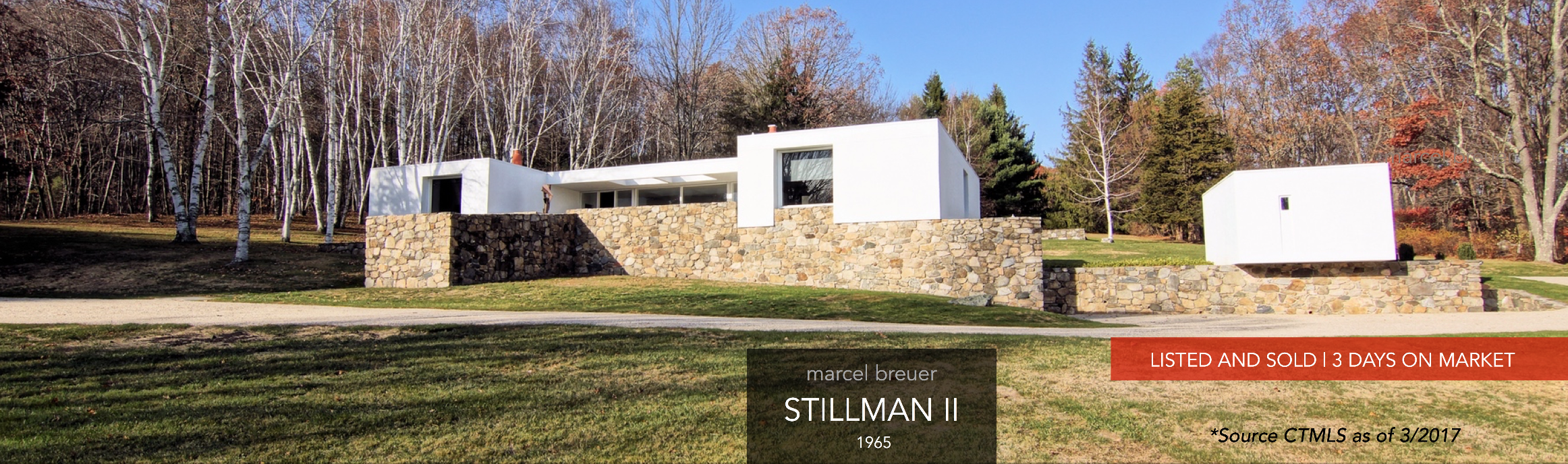
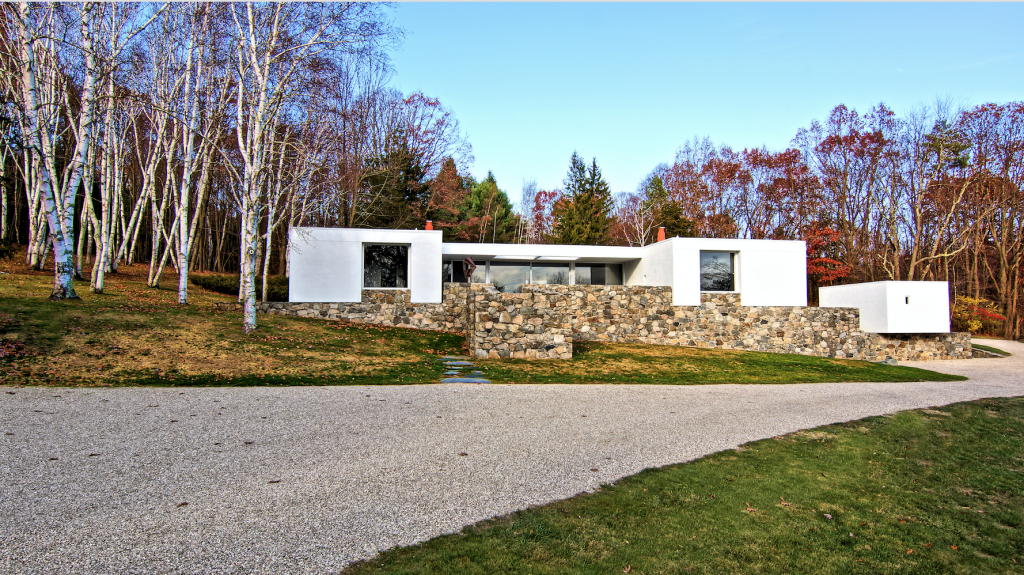
In 1950, Rufus Stillman, the young CEO of the Torin Fan Company in Torrington, commissioned Breuer to design a house on a hillside in Litchfield. The Stillman House I, completed that year, was a revelation: a flat-roofed, binuclear plan with a swimming pool mural painted by Breuer’s friend Alexander Calder. It was so successful that Stillman would commission Breuer to design two more houses for his family over the next twenty years, plus a version of Breuer’s own Wellfleet cottage. Stillman also brought Breuer the Torin Corporation factory commission in Torrington and, through his civic connections, a series of school commissions in the surrounding towns.
At roughly the same time, Stillman’s friend and fellow patron Andrew Gagarin engaged Breuer to build a residence in Litchfield. The Gagarin House I, completed in 1957, was followed nearly twenty years later by Gagarin House II in 1975—one of Breuer’s last residential designs, completed when the architect was 73. Between them, Stillman and Gagarin were responsible for what Breuer himself called one of his most productive working relationships, producing a concentration of eleven buildings in a single Connecticut town.
The 2021 documentary Breuer’s Bohemia, by filmmaker James Crump, tells this story in full. The companion book of the same name is an essential reference for anyone collecting or stewarding a Litchfield Breuer home.
The Other Modernists
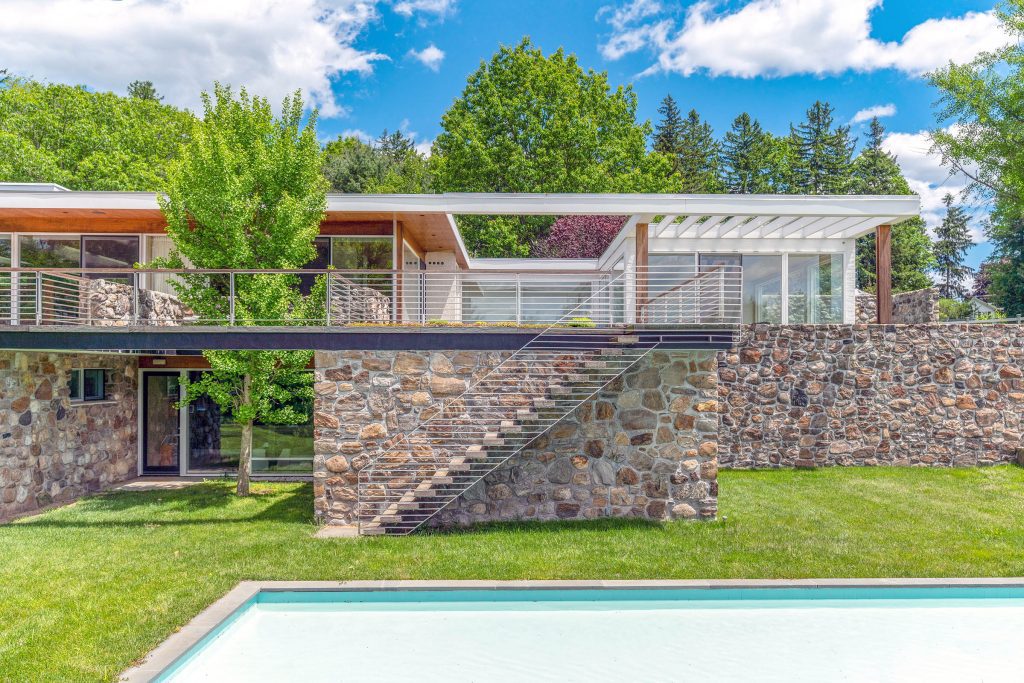
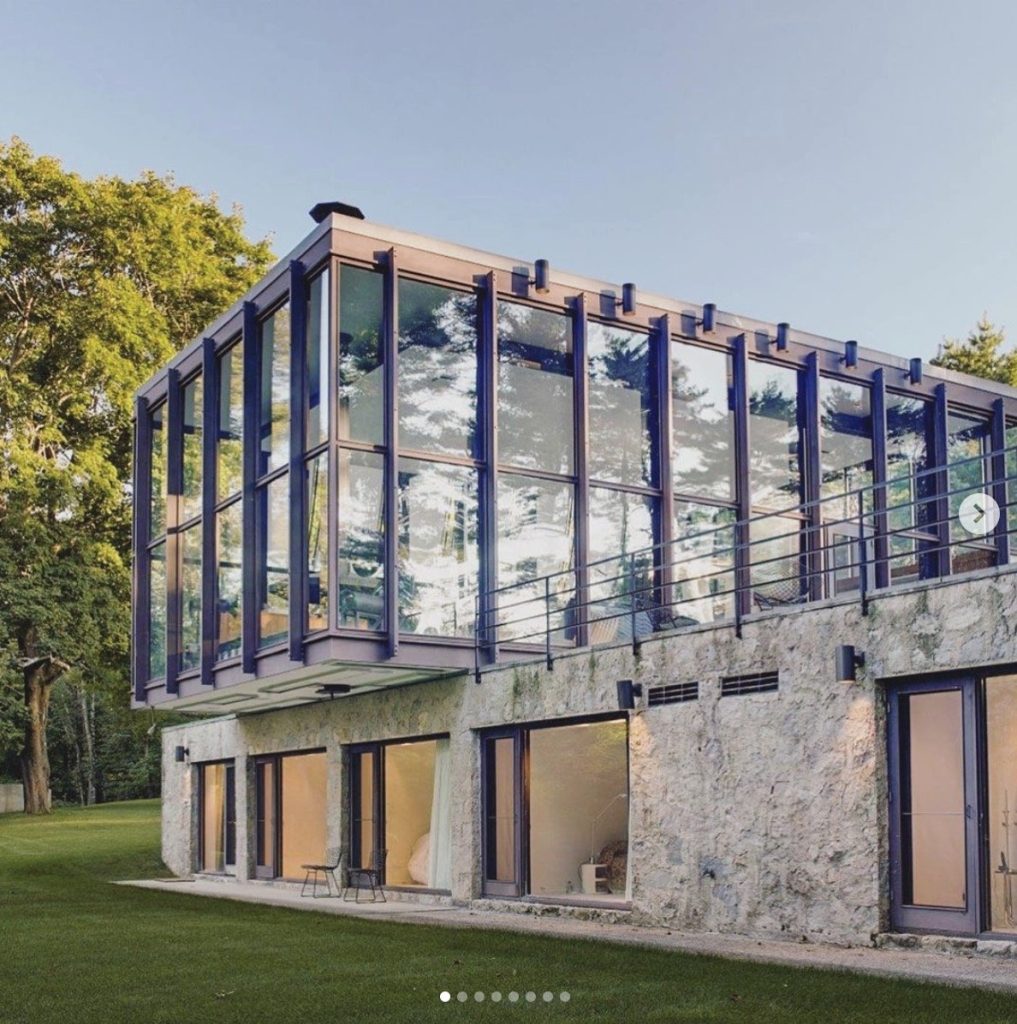
Breuer was the most prolific, but he was not alone. Eliot Noyes, another Harvard Five member, took commissions in the area. Edward Larrabee Barnes designed libraries and private residences. John Johansen contributed institutional work. Richard Neutra, visiting from California, produced at least one Litchfield-area residence. Edward Durell Stone and Willis Mills also have work in the county. The cumulative result is that a drive across the back roads of Litchfield, Washington, Warren, and Kent—punctuated by Federal-era farmhouses and Greek Revival churches—includes, with surprising regularity, a glimpse of a flat roof, a cantilevered terrace, or a long horizontal window-wall that could not have been built before 1948.
Collecting and Stewarding Mid-Century Modern Homes
Mid-century modern houses are a specialized asset class. Many are now seventy-plus years old. Roofs that were built flat in the 1950s often need rebuilding for modern insulation standards. Single-pane fenestration must be carefully replaced with period-appropriate double-glazing. Fieldstone walls, original exterior paint schemes, bluestone terraces, original millwork, and built-in furniture frequently survive intact and must be protected through sensitive restoration, not renovation. The right contractor, the right architect of record, and the right preservation consultant matter.
For buyers, the questions that matter are different from those that apply to conventional homes: Who was the original client? Is the architect’s original drawing set available? Has the house been altered, and by whom? Is the landscape, which in modernist practice was designed alongside the house, still legible? Has the property been documented by Docomomo US or included in a regional architectural survey? These are the questions we are used to answering.
Notable Sales and Quiet Market Opportunities
The Madonna & Phillips Team has represented several architecturally significant transactions in the county, including Marcel Breuer’s Stillman House II and the Gagarin House, along with residences by other regional modernists. We maintain active relationships with architectural historians, preservation organizations, and the estate families connected to these homes. Those relationships matter when a significant house comes to market quietly, as most of them do.
Working with the Madonna & Phillips Team
If you are considering the purchase or sale of a mid-century modern home in Litchfield County, the conversation should begin well before a property is listed. We can help identify houses not currently on the market, assemble provenance and condition documentation, and introduce you to the architects, preservationists, and craftspeople who work specifically on this era of architecture. Whether you are stewarding a Breuer, a Neutra, or a lesser-documented regional modernist home, we welcome the conversation.
Private Advisory
Buying or selling a significant modernist house requires a different playbook.
We help owners and collectors document provenance, read condition risk, and position architect-designed homes before they reach the open market.
Start the Conversation