
The Quiet Cost of a Listing No One Buys
Stale luxury inventory does damage that never shows up on a spreadsheet. It doesn’t appear in carrying costs, broker fees, or expired listing reports. It accumulates quietly — across months and years — in the minds of every buyer, seller, and agent watching a great house sit unsold. In Litchfield County, that damage deserves an honest conversation.
Above \$4 million, the average days on market has stretched beyond 600. Many of those listings cycle through not one but two brokerage relationships before they sell — or before they quietly disappear. Six hundred days. Two brokers. For a home at the apex of what this region has to offer.
“Six hundred days on market isn’t just an inconvenience to the seller. It’s a slow-motion public announcement that the market passed.”
The financial toll is real and calculable: mortgage interest, property taxes, insurance, maintenance — carrying costs compounding month after month on a multi-million dollar asset. Add two sets of marketing budgets, two listing agreements, two rounds of showings and staging that go nowhere. The math is not small. But the financial cost is not the most consequential one.
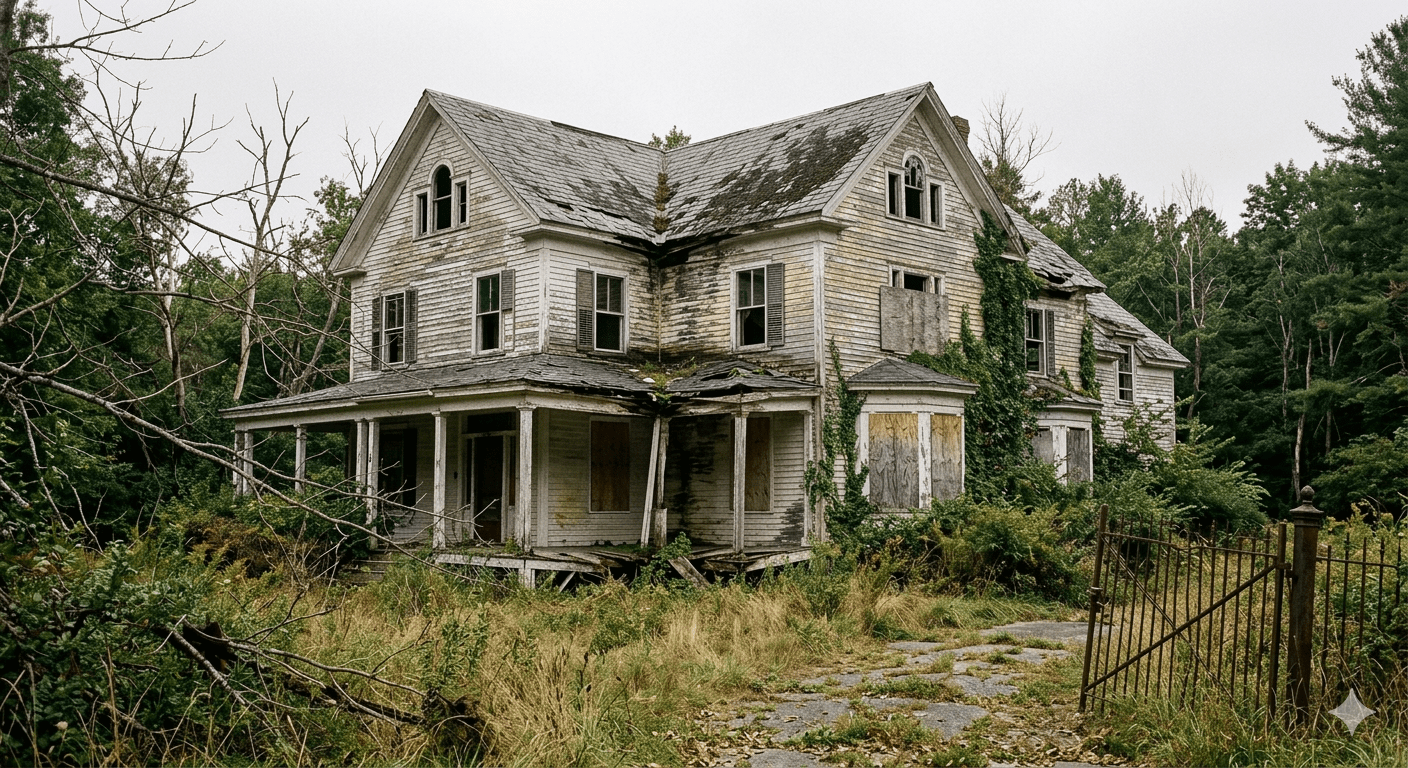
A serious buyer searching the region’s premier properties sees the same extraordinary house — a historic colonial on forty acres, a lakefront compound, a stone manor with provenance — appearing month after month, season after season. The price has been reduced. The broker has changed. The listing description has been rewritten. Still it sits. That buyer draws one conclusion: something is wrong. Not that the home is undervalued. That something is wrong with it. In luxury real estate, perceived desirability is not a secondary consideration. It is the product.
When the finest properties in a market become defined by their failure to sell, the entire luxury segment absorbs that signal. Trophy homes lingering on MLS don’t just hurt their own sellers — they anchor buyer expectations downward, invite skepticism about the region’s depth of demand, and erode the price integrity every seller in the market depends on. The damage is collective. The cost is shared.
“In luxury real estate, perceived desirability is not a secondary consideration. It is the product.”
This past year, our team closed three luxury sales that never appeared on MLS. One became the most expensive residential sale Litchfield has seen in recent memory. Another was the highest sale in Roxbury in five years. The third was a coveted lake property. All three sold in a fraction of the time comparable public listings averaged — three months, five months, done.
No price reductions. No expired listings. No public record of extended market time to anchor expectations or hand buyers a negotiating tool. A curated introduction to the right buyer, at the right moment, through a network built over years at the highest level of this market.
The argument against private listings is exposure — broader public marketing reaches more buyers and produces better outcomes. At the upper tier in Litchfield Hills, that argument doesn’t hold. The pool of qualified buyers for a \$4 million-plus property is not large, and most of them are not browsing Zillow. They are connected to advisors and networks that put exceptional properties in front of them before those properties ever become public knowledge.
Sellers of significant properties should be asking a different question — not how to get the most public attention, but how to reach the right buyer without paying the cost of a public search that doesn’t find one. The right buyer for a significant property is rarely found through public exposure. They are found through relationships — quietly, deliberately, before a listing ever exists. That is the strategy.